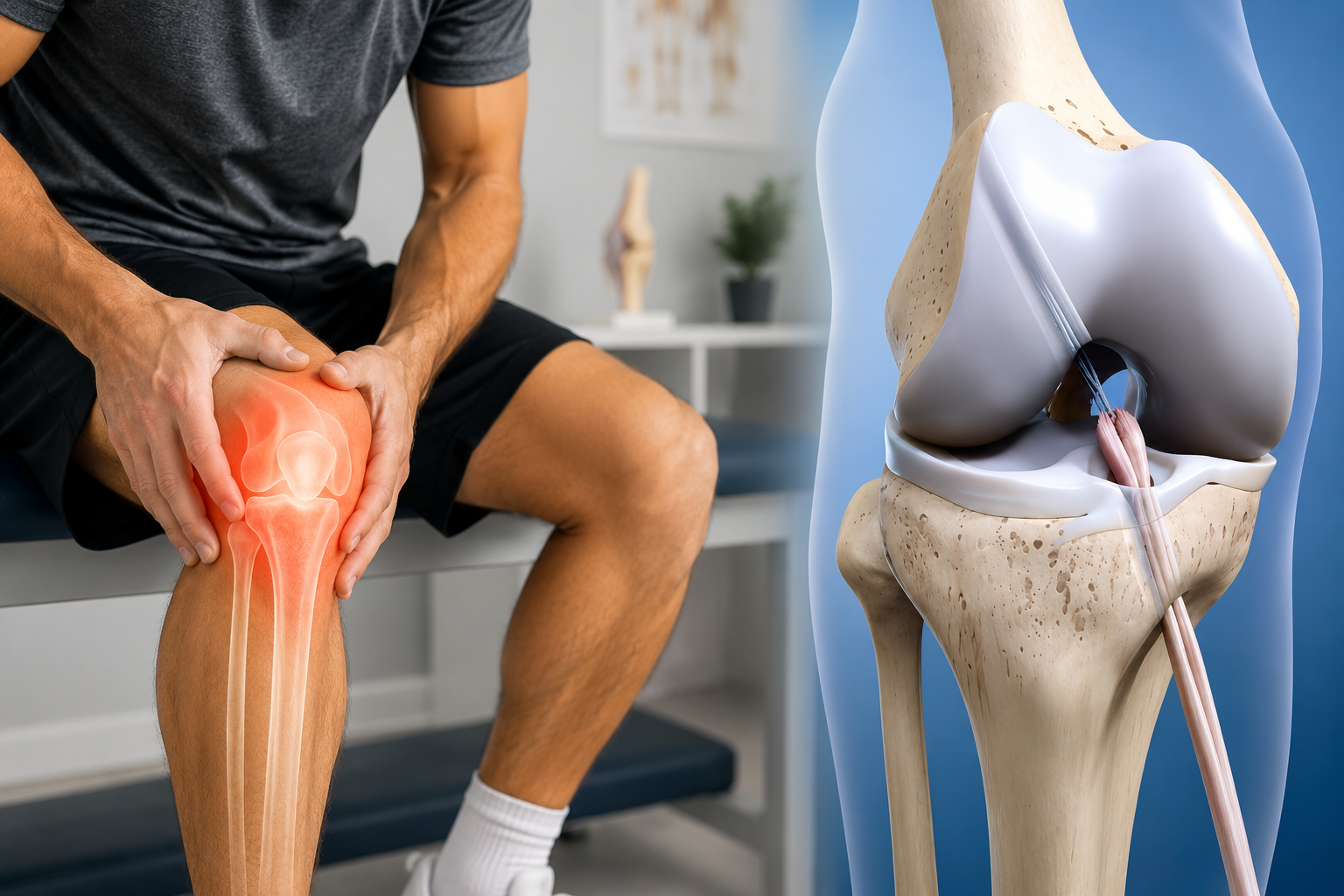
What Does the ACL Do?
The ACL is one of the major stabilising ligaments of the knee. It helps to:
- Prevent the shin bone from sliding forwards
- Control twisting and rotational movements
- Provide stability during walking, running and jumping
- Protect the menisci and joint cartilage from further injury
Without a functioning ACL, the knee may repeatedly "give way", particularly during pivoting movements.
What Happens After an ACL Tear?
Immediately after injury, patients often experience:
- A popping sensation
- Sudden pain
- Rapid swelling
- Difficulty walking
- Reduced knee movement
Although the pain and swelling usually improve over a few weeks, the torn ligament does not heal back to its normal strength in most complete ACL tears. The knee may continue to feel unstable, especially during sports or on uneven ground.
When Can ACL Injuries Be Treated Without Surgery?
Not every ACL injury requires reconstruction. Non-operative treatment may be appropriate if:
- The tear is partial and the knee remains stable
- You have a low activity level
- You do not participate in pivoting sports
- Your knee does not give way during daily activities
- You are willing to modify your activities and follow a structured rehabilitation programme
Physiotherapy plays a vital role in strengthening the muscles around the knee and improving stability.
When Is ACL Surgery Recommended?
ACL reconstruction is commonly recommended when:
Your Knee Gives Way
Repeated episodes of instability increase the risk of further injury.
You Wish to Return to Sports
Sports involving cutting, pivoting or jumping — such as football, cricket, basketball, badminton, tennis and skiing — place high demands on the ACL.
You Have Associated Injuries
ACL tears are frequently associated with meniscus tears, cartilage damage and other ligament injuries. Treating these injuries early may improve long-term knee health.
You Are Young and Active
Active individuals often benefit from restoring knee stability to maintain their lifestyle and sporting ambitions.
Conservative Treatment Has Failed
If physiotherapy and rehabilitation do not restore adequate knee stability, surgery may provide the best chance of returning to an active life.
Why Not Simply Live with a Torn ACL?
Some patients cope reasonably well without surgery. However, repeated episodes of knee instability can lead to:
- Additional meniscus tears
- Progressive cartilage damage
- Early arthritis
- Reduced confidence during activity
- Decreased sports performance
Protecting the knee from repeated giving-way episodes is one of the major reasons ACL reconstruction is recommended in suitable patients.
What Is ACL Reconstruction?
ACL reconstruction is a minimally invasive arthroscopic (keyhole) procedure. The damaged ACL is replaced using a tendon graft, commonly obtained from:
- Hamstring tendons
- Peroneus Longus tendon
- Patellar tendon
- Quadriceps tendon
The choice of graft depends on several factors, including your age, activity level, sporting requirements and individual anatomy. The goal is to restore knee stability while allowing a safe return to daily activities and sports.
Benefits of ACL Reconstruction
For appropriately selected patients, ACL reconstruction can:
- Restore knee stability
- Reduce episodes of giving way
- Protect the meniscus and cartilage
- Improve confidence during activity
- Allow return to sports after rehabilitation
- Reduce the risk of further knee damage
Successful outcomes depend not only on surgery but also on a structured rehabilitation programme.
Is Timing Important?
Yes. Delaying treatment in a persistently unstable knee may increase the risk of secondary injuries to the meniscus and joint cartilage. Early assessment by an experienced orthopaedic surgeon helps determine the most appropriate treatment plan for your individual situation.
Rehabilitation Is Just as Important as Surgery
Surgery is only one part of the recovery journey. A successful outcome requires:
- Structured physiotherapy
- Progressive strengthening
- Balance and proprioception training
- Sport-specific rehabilitation
- Patience and commitment
Returning to sport too early may increase the risk of reinjury.
Frequently Asked Questions (FAQs)
Will my ACL heal on its own?
Most complete ACL tears do not heal sufficiently to restore normal knee stability.
Can I walk with a torn ACL?
Yes. Many patients can walk normally after the initial pain settles, but the knee may remain unstable during twisting or sporting activities.
Will I be able to play sports again?
Many patients successfully return to recreational and competitive sports after ACL reconstruction and appropriate rehabilitation. The timing depends on individual recovery and sport-specific demands.
Is surgery always necessary?
No. Treatment should be individualised. Some patients achieve excellent function with physiotherapy alone, while others benefit from surgery because of ongoing instability or their activity goals.
How long is recovery?
Most patients begin walking shortly after surgery, but full rehabilitation typically takes several months. Returning to high-demand sports is guided by clinical assessment, strength, balance and functional testing rather than time alone.
If I need surgery, who will actually perform it?
Dr. Anand Jadhav performs every operation personally. Assisting staff may support the procedure, as is standard in any operating theatre, but the surgery itself is never delegated to another surgeon.
Early Assessment Leads to Better Decisions
Every ACL injury is unique. The best treatment depends on your symptoms, examination findings, MRI results, activity level and personal goals. Whether your treatment involves rehabilitation alone or ACL reconstruction, early specialist assessment can help you make an informed decision and protect the long-term health of your knee.
Why Choose Dr. Anand Jadhav?
- 30+ Years of Orthopaedic Experience
- 12 Years NHS (United Kingdom)
- Advanced Arthroscopy & Sports Injury Specialist
- Expertise in ACL, Meniscus & Multi-Ligament Knee Injuries
- Personalised Treatment Plans
- Evidence-Based Surgical Care
- Comprehensive Rehabilitation Guidance
📞 Book your consultation — call 904 905 0990 or visit us at London Joints Clinic, Wanawadi or Jupiter Hospital, Baner, Pune.