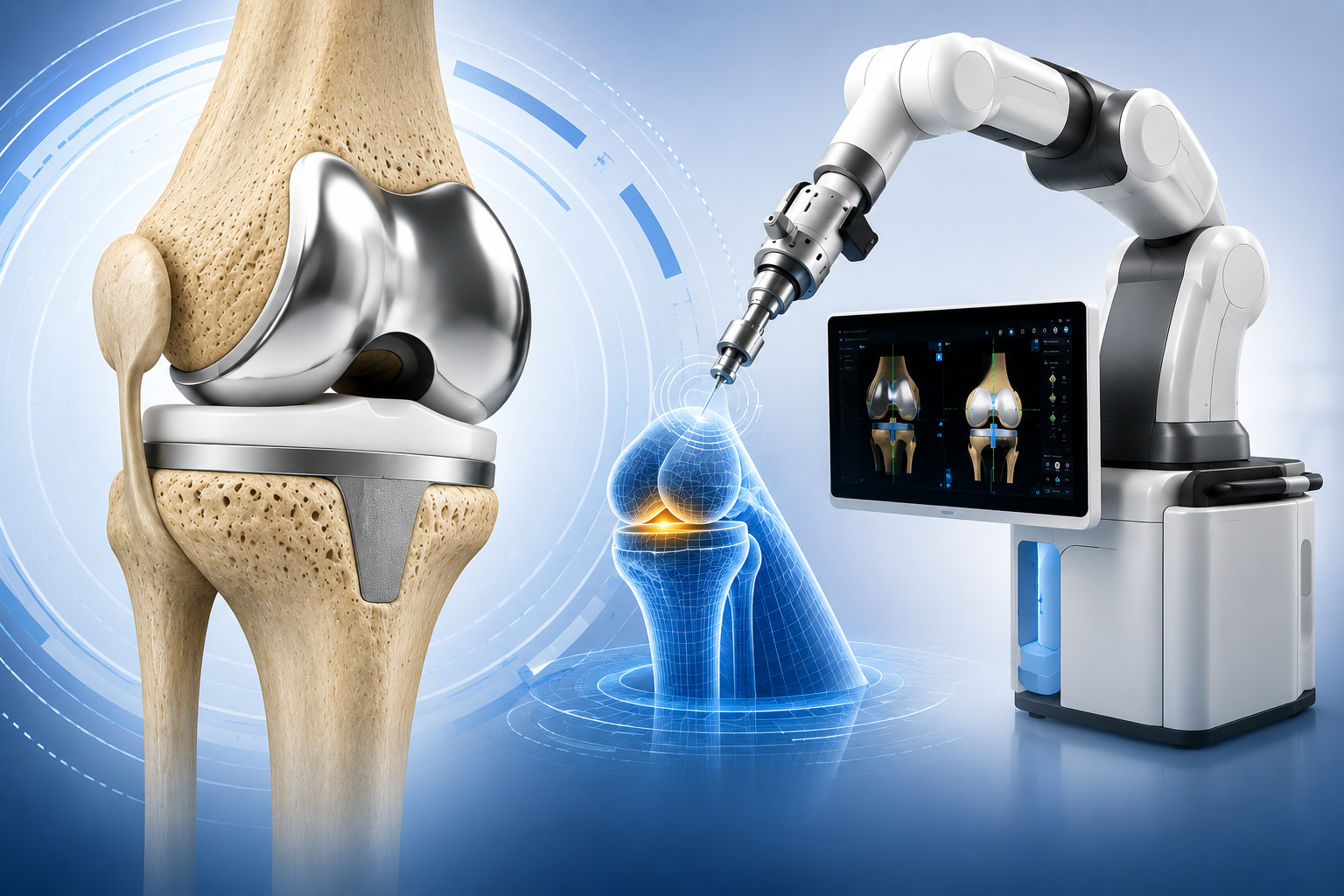
What Is Robotic Knee Replacement?
Robotic knee replacement combines the surgeon's expertise with advanced computer technology to assist in:
- Detailed surgical planning
- Accurate implant positioning
- Precise bone preparation
- Real-time assessment of ligament balance
- Individualised alignment based on each patient's anatomy
This personalised approach aims to restore a more natural-feeling knee while maintaining the highest standards of surgical precision.
Advantages of Robotic Knee Replacement
1. Greater Surgical Precision
Robotic technology provides highly accurate information during surgery, helping the surgeon position the knee implant with exceptional precision. Even small improvements in implant positioning may contribute to better joint mechanics and long-term function.
2. Personalised Surgery
Every knee is different. Instead of relying solely on standard measurements, robotic systems create a patient-specific surgical plan based on your individual anatomy and ligament balance. This allows surgery to be customised rather than using a "one-size-fits-all" approach.
3. Better Soft Tissue Balance
Successful knee replacement depends not only on placing the implant correctly but also on balancing the surrounding ligaments. Robotic technology enables the surgeon to assess ligament tension throughout the range of motion and make precise adjustments where required. Balanced ligaments often contribute to improved knee stability and smoother movement.
4. Accurate Implant Positioning
Proper implant alignment is one of the key factors in a successful knee replacement. Robotic guidance helps achieve planned implant positioning with a high degree of accuracy, supporting optimal knee function.
5. Preservation of Healthy Bone
Robotic systems help the surgeon perform precise bone preparation, allowing removal of only the amount of bone necessary for the planned implant. Preserving healthy bone may be beneficial, particularly if future revision surgery is ever required.
6. Potential for Less Soft Tissue Trauma
Because surgery is carefully planned and executed with precision, unnecessary manipulation of surrounding tissues may be reduced in appropriately selected cases. This can contribute to a smoother early recovery.
7. Improved Early Recovery
Many patients experience:
- Earlier mobilisation
- Better confidence while walking
- Improved early knee function
- Quicker return to routine daily activities
Recovery varies from patient to patient and depends on overall health, rehabilitation and commitment to physiotherapy.
8. Reduced Post-Operative Pain
Accurate implant positioning and careful soft tissue handling may contribute to reduced early post-operative discomfort in some patients. Pain management remains an important part of every patient's recovery programme.
9. Better Knee Function
The goal of robotic-assisted surgery is not simply pain relief — it is to help restore comfortable, stable and functional movement. Many patients report improved confidence while walking, climbing stairs and performing everyday activities.
10. Enhanced Surgical Planning
Before making any bone cuts, the robotic system allows the surgeon to evaluate multiple surgical options in real time. Adjustments can be made during surgery to optimise:
- Alignment
- Implant size
- Ligament balance
- Range of motion
This flexibility allows truly personalised treatment.
Who Can Benefit?
Robotic knee replacement may be suitable for patients with:
- Advanced knee osteoarthritis
- Rheumatoid arthritis affecting the knee
- Painful stiffness
- Progressive deformity
- Failure of non-surgical treatment
- Significant reduction in quality of life
A detailed clinical assessment is required to determine whether robotic knee replacement is the most appropriate option.
Is Robotic Surgery Better Than Conventional Knee Replacement?
Both conventional and robotic knee replacement can provide excellent outcomes when performed by an experienced surgeon.
Robotic technology offers additional precision and planning tools that may help optimise implant positioning and soft tissue balance. While many patients experience excellent outcomes with robotic-assisted surgery, recovery and long-term success also depend on factors such as the severity of arthritis, overall health, rehabilitation and adherence to post-operative advice.
Common Myths About Robotic Knee Replacement
"The robot performs the surgery."
False. The surgeon remains in complete control throughout the operation. The robotic system provides planning assistance and precision guidance.
"Robotic surgery is only for younger patients."
False. Suitability depends on the patient's condition and overall health rather than age alone.
"Recovery is the same for everyone."
Recovery varies between individuals and depends on many factors, including fitness, medical conditions, pain tolerance and rehabilitation.
Frequently Asked Questions (FAQs)
Is robotic knee replacement safe?
Yes. Robotic systems are designed to enhance surgical precision and are used by trained orthopaedic surgeons following established safety protocols.
Will I recover faster?
Many patients experience excellent early recovery, although recovery time varies from person to person.
How long does the operation take?
Operating time depends on the complexity of the case and individual patient factors. Your surgeon will discuss what to expect before surgery.
Will the implant last longer?
Modern knee replacements are designed for long-term function. Longevity depends on several factors, including implant design, surgical technique, activity level and overall health.
Will I still need physiotherapy?
Absolutely. Physiotherapy remains an essential part of recovery and achieving the best possible outcome after knee replacement.
If I need surgery, who will actually perform it?
Dr. Anand Jadhav performs every operation personally. Assisting staff may support the procedure, as is standard in any operating theatre, but the surgery itself is never delegated to another surgeon.
Why Choose Dr. Anand Jadhav?
- 30+ Years of Orthopaedic Experience
- 12 Years NHS (United Kingdom)
- Advanced Robotic Knee Replacement Specialist
- Expertise in CORI Robotic-Assisted Knee Replacement
- Personalised Treatment Plans
- International Standards of Care
- Comprehensive Rehabilitation Programme
Take the First Step Towards Pain-Free Living
If knee arthritis is limiting your daily activities and conservative treatments are no longer providing relief, robotic knee replacement may help you regain mobility, confidence and quality of life.
📞 Schedule a consultation to discuss your treatment options — call 904 905 0990 or visit us at London Joints Clinic, Wanawadi or Jupiter Hospital, Baner, Pune.